


Do it yourself, that is what we pay the intermediary?


Do it yourself – what do we really pay a real estate agent for?
 In theory, each of us could repair a car without using a specialist workshop, design and build a house without a construction company, sell a car without a dealer or conduct our own court case without a lawyer.
You can. The real question is: is doing everything yourself always worthwhile – and will it really be cheaper, faster, more effective and safer?
The same applies to real estate. An owner can sell an apartment, house, plot of land, commercial unit or another property independently. A buyer can search for offers, contact sellers, negotiate the price and organise the successive stages of the transaction on their own.
The difficulty begins when it becomes clear that buying or selling real estate involves much more than finding an advertisement, viewing the property and signing an agreement.
You need to know what to check, what to ask, which documents to request, what to supervise, what arrangements should be made and when a notary, lawyer, valuer, bank or another appropriate specialist should become involved in the process.
A common perception of the work of a real estate agent is very simple: the agent obtains a listing from one client, shows the property to another and issues an invoice. In practice, professional transaction support can involve considerably more.
So let us look at what may actually need to be done when selling or buying real estate and what we are really paying a professional real estate agent for.
1. Checking the legal situation and property documentation
Depending on the type of property, the country and the nature of the particular transaction, it may be necessary, among other things, to:
- identify the owner or owners of the property,
- verify whether the person offering the property is authorised to sell it,
- check the documentation presented by the seller for completeness and validity,
- compare information contained in the documents with information disclosed in the relevant registers,
- determine whether the consent of any other persons or entities is required for the sale,
- identify missing documents and determine how they should be obtained or supplemented,
- determine what additional steps should be completed before the transaction takes place.
A real estate agent does not replace a notary or lawyer. An experienced agent should, however, know which issues require verification, which documents may be important and when the appropriate specialist should become involved in the process.
2. Checking what is actually being offered
A property description prepared by the seller or published in an advertisement is only the beginning.
Professional preparation of a property listing may require, among other things:
- preparing a description of the property on the basis of information and documents supplied by the owner,
- verifying important information during an inspection of the property,
- checking the location and immediate surroundings,
- preparing appropriate photographs, video material or other presentation materials,
- identifying the important advantages and potential of the property,
- drawing attention to matters that may be relevant to a potential buyer.
A good property listing is not about concealing disadvantages or presenting a property as better than it really is. Its purpose is to allow a potential buyer to make the most informed possible assessment of what they are actually buying.
3. Encumbrances, debts and other obligations
Depending on the type of property and the country, relevant matters may include:
- mortgages and other forms of security,
- easements, rights, claims or other rights of third parties,
- outstanding property taxes and local charges,
- amounts due to a condominium association, administrator, management company or residential complex,
- outstanding utility bills or other charges connected with the property,
- loans or other liabilities whose settlement may be relevant to the sale,
- other entries or circumstances that may affect how the transaction should be conducted.
A statement that the property is “free of encumbrances” should not replace verification of the available documents and appropriate registers.
If debts or encumbrances exist, it is also necessary to establish how they are to be settled and which conditions should be fulfilled before ownership is transferred.
4. The price – not merely the seller`s expectation
Determining the price of a property should not simply mean entering the amount that the owner would like to receive in an advertisement.
It is worth comparing, among other things:
- asking prices of similar properties,
- available information concerning actual transaction prices,
- location,
- standard and technical condition,
- size and functionality,
- the current supply of competing properties,
- the level of buyer interest,
- the situation on the particular local market.
In certain cases, it may also be appropriate to obtain an additional professional valuation prepared by an authorised property valuer.
A real estate agent should be able to confront the expectations of the seller or buyer with the actual market situation rather than simply accepting every expected price without question.
5. Arrangements between the parties and preparation of the transaction
 The closer the transaction comes to completion, the more important individual details may become.
The price, deadlines, method of payment, furniture and equipment remaining in the property, date of handover, reservation conditions, existing liabilities and other arrangements between the parties should be clearly established.
Organisation of the process may include, among other things:
- collecting and organising arrangements made between the parties,
- coordinating the required documentation,
- communicating with the notary and other participants in the process,
- setting deadlines for successive stages,
- referring legal, tax, technical or financial matters to the appropriate specialists,
- coordinating preparation of documents required for completion of the transaction,
- organisational supervision of the successive stages in accordance with the parties` arrangements and the scope of the concluded agreement.
A real estate agent is not a lawyer, notary, tax adviser or property valuer. The agent`s role may, however, include coordinating the process and ensuring that appropriate matters are referred to the appropriate specialists at the appropriate time.
And what if you are selling a property?
Then there is another substantial part of the work to consider.
Publishing an advertisement online may indeed take only a few minutes. Professionally preparing and managing the sale of a property requires considerably more.
6. Preparing the listing, marketing and reaching potential buyers
Selling a property may require, among other things:
- preparing an attractive but accurate property description,
- preparing photographs, videos and other presentation materials,
- selecting appropriate methods and places for promoting the property,
- publishing the listing on relevant domestic and international property portals and advertising services,
- using the agency`s own website, client databases, cooperation with other agents and other available marketing channels,
- preparing additional advertising materials where appropriate,
- responding to enquiries from potential buyers,
- answering telephone calls and discussing the property,
- distinguishing genuinely interested buyers from casual enquiries and proposals that bear little relation to market reality,
- organising viewing appointments,
- presenting the property to potential buyers,
- conducting discussions concerning the price and other transaction terms,
- negotiating,
- updating the listing and reacting to changes in the market,
- devoting time, availability and patience – often over many weeks or months.
There may also be costs of marketing, publication, property preparation and travel, as well as considerable time spent dealing with people who ultimately do not buy the property.
And this is where it is worth asking a very simple question: does saving the commission always mean making a real saving?
What else can a real estate agent do?
The scope of the service always depends on the agreement and the nature of the particular transaction, but professional support may also include:
- preparing and distributing the property listing,
- making it available to cooperating real estate agents and partners,
- actively reaching potential buyers,
- organising and conducting property viewings,
- managing communication between interested parties,
- helping the parties identify terms that may be acceptable to both sides,
- conducting or coordinating negotiations,
- coordinating information concerning possible methods of financing the transaction, while creditworthiness and banking products are assessed by the appropriate institutions and specialists,
- planning successive stages of the process and their timing,
- coordinating documentation required for completion of the transaction,
- working with a notary, lawyer, bank, property valuer, developer, administrator or other participants in the process,
- coordinating the method of settling existing debts or liabilities where applicable,
- organisational supervision of the arrangements made between the parties,
- participating in handover of the property, including preparation of a handover protocol where this is included within the agreed scope of service.
A real estate agent`s remuneration is therefore not merely payment for publishing an advertisement, answering a telephone call or opening the door to a property.
It is remuneration for the scope of work defined in the agreement – including expertise, experience, time, organisation, marketing, communication, negotiation and coordination of the transaction process.
“I`ll do it myself” – of course you can
We are not claiming that every transaction completed without a real estate agent must end in problems. Nor are we claiming that merely using an agent automatically eliminates every possible risk.
Professional support is intended to organise the process, reduce the possibility of costly mistakes, identify issues requiring attention at an earlier stage and prevent the client from having to discover everything independently only after a problem has already appeared.
Because real estate can contain surprises.
Sometimes an apparently insignificant entry in a register can be important. Sometimes the description sounds considerably better than reality. Sometimes an “exceptional opportunity” requires far more careful examination than the attractive price and photographs might suggest.
You can therefore do everything yourself. The question is not only “can I?”, but also “do I know exactly what I need to do, what I need to supervise, what I need to check and how much of my own time I am prepared to devote to it?”.
If the agent matters – how do you choose the right one?
This question is just as important as the decision to use an agent in the first place.
Do not choose a company solely on the basis of its own declarations. Verify it.
It is worth checking, among other things:
- how long the company has actually been operating,
- whether its registration details can be verified,
- whether it has appropriate professional liability insurance,
- whether its cooperation terms and remuneration are clearly explained,
- whether it genuinely knows the market on which it provides its service,
- whether it can explain the procedures, costs and successive stages of a transaction,
- whether it also communicates risks and limitations clearly,
- who will actually handle your case and coordinate the process.
Why is ILS POLAND GROUP worth checking?
 At ILS POLAND GROUP, we follow a simple principle: we do not expect you to choose us merely because we write a few flattering sentences about ourselves.
Check us.
ILS has operated in the real estate market since 2008, and property in Bulgaria has been one of the areas of our activity from the very beginning. On our website, we provide information allowing you to verify our history, the details of our companies and registered Bulgarian branch, as well as the principles and procedures applied in the transaction process.
We also do not assume that every property is a good investment or that every offer will be suitable for every client.
Our task is not to bring about a transaction at any price. Our task is to guide the client through the scope of the process agreed in the contract and provide as much relevant information as reasonably possible so that the client can make their own informed decision.
>> Get to know ILS POLAND GROUP
>> Check the details of our companies and Bulgarian branch
>> Discover the history of ILS since 2008
>> See how we work when selling property
What about 0% commission for the Buyer?
Professional support does not always mean that the Buyer bears the cost of ILS remuneration.
For selected properties, the remuneration connected with handling the transaction is paid by the Seller, developer or another entity offering the property. The Buyer may therefore receive professional ILS support within the scope of the concluded agreement, without bearing the cost of ILS remuneration.
>> See how 0% commission for the Buyer works
Do it yourself?
Of course you can.
But before deciding that a real estate agent`s remuneration is merely a cost, consider how much expertise, time, organisation, marketing, negotiation and transaction coordination you will then be taking on yourself.
Because an agent`s commission is not remuneration merely for opening the door to a property. You are paying for an agreed scope of professional service intended to mean that you do not have to perform all of this work yourself.
Real estate with a sense of humour – but with a very serious conclusion
Some of the examples and photographs below are humorous in nature. In an exaggerated way, however, they illustrate a very real principle of the property market:
a description, an attractive photograph, a low price or a seller`s assurance should never replace proper verification of what is actually being offered.
One example of something that may require attention is an unusual entry appearing in a property register. Below we retain a historical example taken from a Polish land and mortgage register:
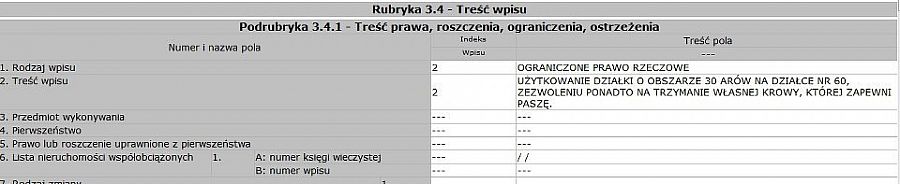
Historical material source: facebook.com/Agent.Po.Robocie
In the gallery below you will find further examples showing – sometimes with a considerable dose of humour – why, when dealing with real estate, it is worth checking more than the first impression.


Do it yourself, that is what we pay the intermediary?
Where do you like to live?
 Real Estates in Bulgaria
 Real Estates in Egypt
 Real Estates in Portugal
 Real Estates in Spain
 Real Estates in Turkey
 Real Estates in Germany
 Real Estates in Greece
 Real Estates in Brazil
 Real Estates in U.S.
 Real Estates in Poland Real Estates in Szczecin - Poland Estates by the sea - Poland


News 

House with a plot over the sea for 4.000 EUR what is the truth
House with land by the sea for EUR 4,000 – what is the truth? This article was originally published several years ago. In August 2026, it was comprehensively updated by ILS POLAND GROUP. The photographs from the original version of the article remain as archival material documenting the renovation carried out at that time. All information concer...Events

Domiporta Partnership Certificate 2026
Domiporta.pl Partnership Certificate 2026 for ILS POLAND GROUP ILS POLAND GROUP Sp. z o.o. has received the Domiporta.pl Partnership Certificate for 2026. The certificate documents the cooperation between ILS POLAND GROUP and Domiporta.pl – a Polish real estate portal, where selected properties from our portfolio are also presented. The co...


Promotions

RABAT ZONE Certificate
RABAT ZONE Certificate – Additional Benefits for ILS POLAND GROUP Clients RABAT ZONE is a partner programme developed for ILS clients. Its participants may benefit from currently available discounts, preferential terms and other benefits offered by the programme partners. The RABAT ZONE Certificate confirms that its holder may use the offers ...